
Most advice on what to pack for a ski trip to Colorado covers the obvious things — jacket, gloves, goggles — which nobody forgets. What catches people out here is altitude and dryness. Colorado’s resorts sit between roughly 8,000 and 11,000 feet in air thin enough to sunburn you through cloud and dry enough to crack your lips by day two.
Pack for that and the rest sorts itself out. For the transfer from DIA, call (720) 694-7791.
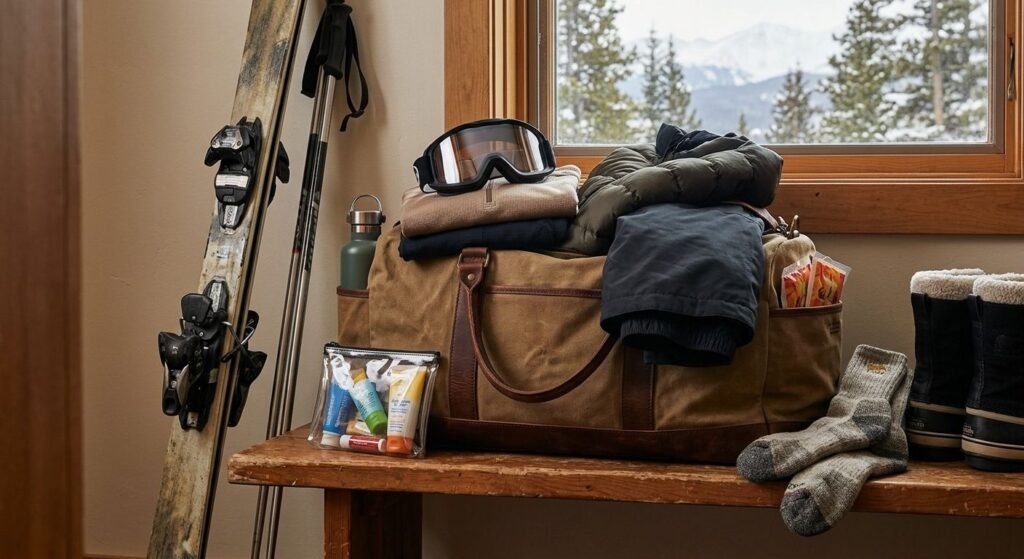
The Things People Actually Forget
Lip balm with SPF. The single most commonly forgotten item on a Colorado ski trip, and the one you’ll notice missing fastest. Buy two.
High-SPF sunscreen. UV exposure increases with altitude and snow reflects it back at you. Sunburn in February is routine here, and it catches people on the underside of the chin where they never think to apply.
Moisturiser and lotion. Colorado humidity sits in single digits much of the winter. Skin that behaves fine at home will not.
A water bottle. Altitude dehydrates you faster, and dehydration is a large part of what people mistake for altitude sickness.
Electrolyte tablets. Cheap, light, and genuinely effective for the first couple of days.
Sunglasses as well as goggles. You’ll want them on the deck, in the car and walking through the village.
What to Pack for a Ski Trip to Colorado: By Category
| Category | Bring | Notes |
|---|---|---|
| Base layers | 2–3 tops, 2–3 bottoms | Merino or synthetic — never cotton |
| Mid layers | 1–2 fleece or light down | The layer you adjust most |
| Outer shell | Waterproof jacket and trousers | Rentable if you don’t own one |
| Socks | One pair per ski day | Ski-specific, one pair only per day |
| Extremities | Gloves, spare liners, neck gaiter, beanie | Gloves get wet — bring a second pair |
| Sun and skin | SPF lip balm, sunscreen, moisturiser | The altitude category |
| Evening | Warm coat, waterproof boots, jeans | Villages are icy after dark |
| Hardware | Helmet, goggles, boots if you own them | Skis are often easier to rent |
The Layering Rule
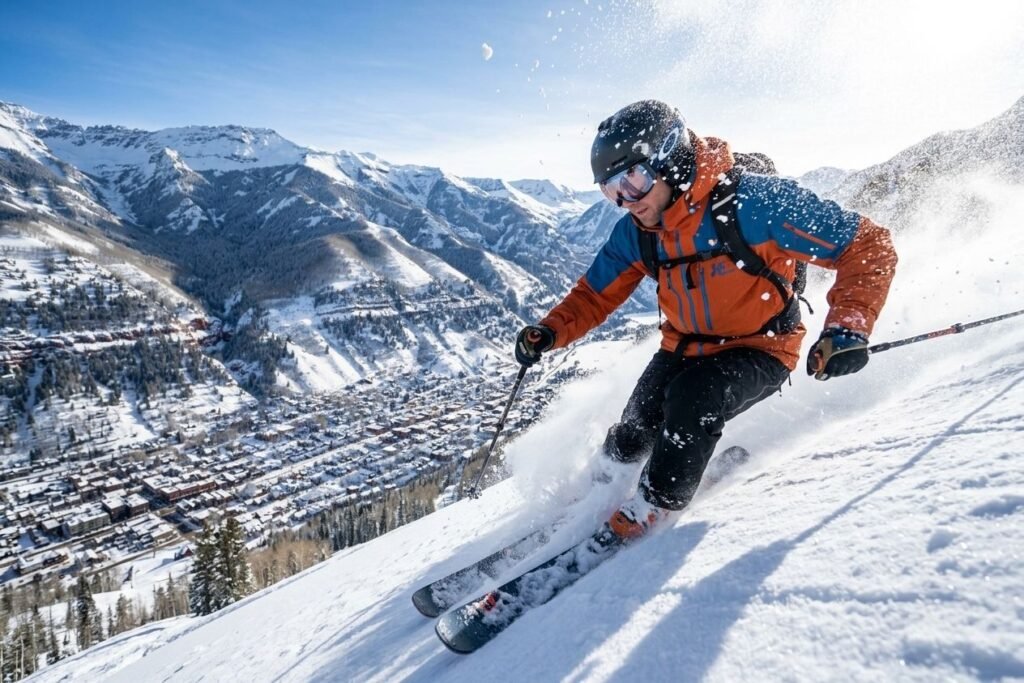
Three layers, and the point is being able to remove the middle one.
A Colorado ski day frequently starts at 10°F and reaches 40°F on a sunny afternoon — especially in March, where mornings are firm and afternoons soften. Dressing for the morning means overheating by eleven; dressing for the afternoon means a miserable first hour.
The base layer wicks, the mid layer insulates and comes off, the shell blocks wind and snow. Cotton anywhere in that stack holds moisture against your skin and makes you colder — it’s the one material rule worth being strict about.
Boots Yes, Skis Maybe
If you own ski boots, bring them. Fit is the difference between a good day and a painful one, and rental boots are a compromise even when they’re decent.
Skis are a different calculation. They’re heavy, airlines charge for them, and resort rental shops carry current equipment suited to the conditions you’ll actually be skiing. Unless you have skis you genuinely prefer, renting on the mountain is usually the easier call — and it means one less oversized bag.
Either way, declare what you’re bringing when you book transport. Ski and board bags are long and rigid and change the vehicle you need — our guide to vehicle sizing covers the capacity maths.
Altitude, Briefly
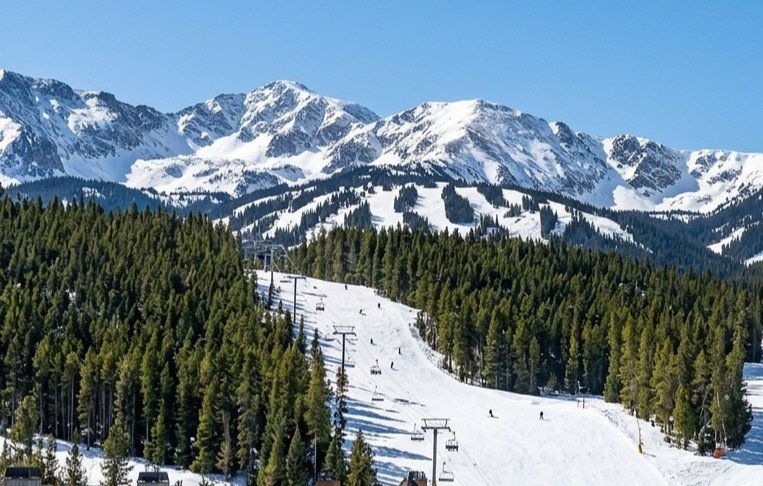
Breckenridge sits at 9,600 feet. Vail Village at 8,150 with lifts above 11,000. Arapahoe Basin’s base is over 10,700.
Arriving from sea level and skiing the same day means headaches, breathlessness and fatigue for a lot of people. Packing helps more than you’d think — water bottle, electrolytes, and whatever over-the-counter painkiller you normally use, because finding a pharmacy in a resort village at 9pm is a poor use of an evening.
If you have a condition affected by altitude, talk to a doctor before travelling rather than packing around it.
What to Leave at Home
Cotton anything you planned to ski in. Heavy jeans for the mountain — they soak and freeze. More ski outfits than days, since nobody is looking. And skis, if you were on the fence.
One genuinely useful subtraction: pack fewer evening clothes than you think. Colorado resort towns are relaxed to the point of informality, and the overdressed people in any Breckenridge restaurant are always the visitors.
Packing for the Journey, Not Just the Mountain
Keep your ski socks, base layer and goggles in your carry-on. If a checked bag goes astray — which happens more over peak weeks — you can rent outerwear at any resort but you cannot rent the things that touch your skin.
Carry medication, chargers and anything irreplaceable. And if you’re arriving late, having a warm layer accessible matters: the walk from the terminal to a vehicle at DIA in January is short but genuinely cold.
Check conditions on COtrip.org before the drive up, and see our airport transfer guide for how pickup works.
Frequently Asked Questions
What do people most often forget on a Colorado ski trip?
SPF lip balm, high-factor sunscreen and moisturiser. Altitude and dry air catch out almost every first-time visitor.
How many base layers do I need?
Two to three sets for a week, assuming you can wash. Merino resists odour better than synthetic.
Should I bring my own skis?
Boots yes, if you own them. Skis are heavy, cost extra to fly and are easy to rent at the resort.
Do I need special clothes for the evenings?
A warm coat and waterproof boots. Colorado resort towns are informal — you’ll rarely need more.
What should I pack for altitude?
A water bottle, electrolytes and your usual painkiller. Hydration prevents most of what people mistake for altitude sickness.
What should go in my carry-on?
Ski socks, a base layer, goggles, medication and chargers — the things you can’t rent if a bag is delayed.