
The thing to understand about ski gear luggage airline rules is that most US carriers treat a ski bag and a boot bag together as one checked item — which sounds generous until you discover the policies differ by airline, by fare class, and by whether your bag goes a centimetre over a length limit nobody tells you about until the counter.
Once you land, call (720) 694-7791 for the run to the mountains.
How Airlines Usually Count Ski Gear
The common structure across major US carriers works like this.
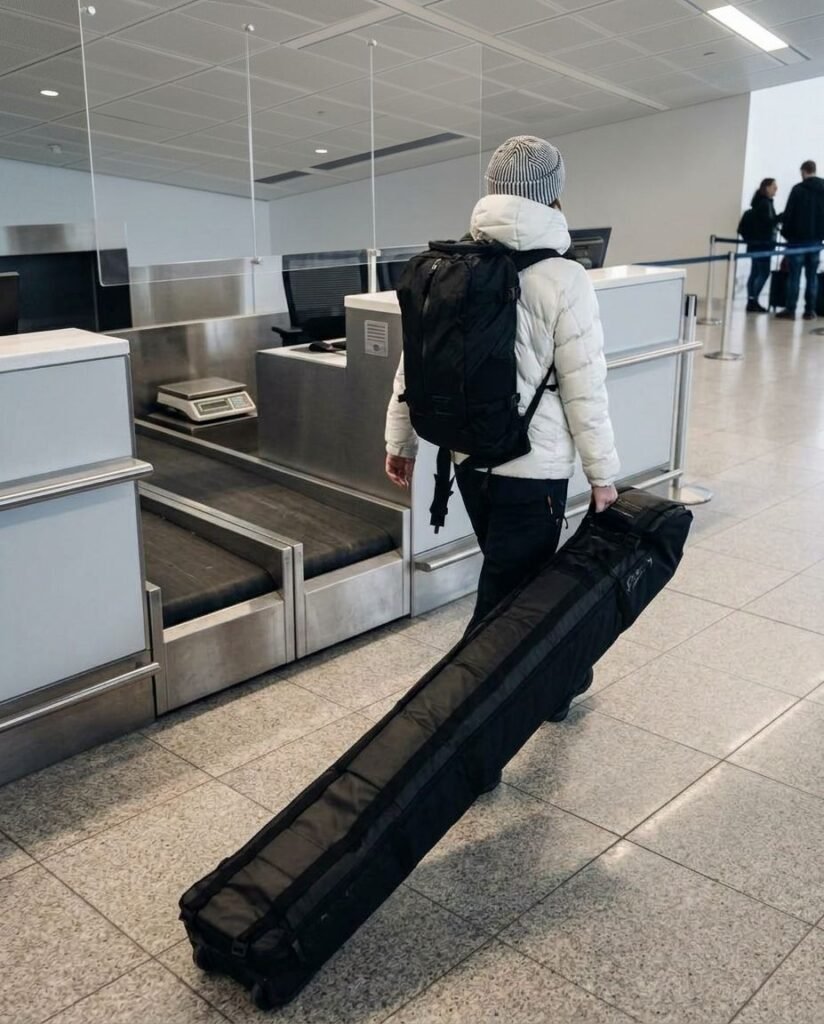
A ski or snowboard bag plus a boot bag count as one checked item between them. You don’t pay twice. That’s the useful part of the rule and the part people don’t know.
Standard checked baggage fees still apply, so if that counts as your first or second bag, you pay the normal rate for it. Weight limits apply as usual — typically 50lb before overweight charges, which a ski bag with two pairs in it can exceed.
And oversize charges generally don’t apply to ski equipment specifically, where they would for other long items. That exemption is why flying with skis is cheaper than people assume.
But verify with your airline. Policies change, budget carriers often differ substantially, and international routes follow different rules entirely. Check your specific carrier’s current baggage page before you book — this is one area where a general rule is a starting point rather than an answer.
The Fly-or-Rent Calculation
| Your situation | Usually better | Why |
|---|---|---|
| Own boots, own skis, ski often | Fly with both | Fit and familiarity beat the fee |
| Own boots, average skis | Fly boots, rent skis | Best of both, one less bag |
| Own nothing special | Rent everything | Current gear, no baggage risk |
| Travelling as a family of four | Rent | Four ski bags changes your vehicle |
| Short trip, two or three days | Rent | The hassle outweighs the days |
| Powder-specific skis you love | Fly with them | Rentals rarely match a favourite |
The underrated middle option is flying with boots only. Boots are the piece where fit genuinely matters and the one rental shops compromise on most. They pack into a normal checked bag, cost nothing extra, and let you rent skis suited to the conditions you actually find.
What Gets Damaged, and How to Prevent It
Skis and boards travel through oversized baggage handling, which is less gentle than the main belt.
Use a padded bag rather than a thin sleeve — the price difference pays for itself the first time. Loosen your bindings’ DIN setting for travel, which reduces spring tension over a long trip. Pad the tips and tails, which take the worst of it. And remove anything you’d hate to lose from the bag, because ski bags go astray more often than suitcases during peak weeks.
Photograph your gear before you check it. If something arrives damaged, a dated photo is the difference between a claim and an argument.
Where the Rules Meet Your Ground Transport
This is the part that catches groups out after the flight is sorted.
Ski bags are long, rigid and don’t compress. A full-size SUV seats six and carries four with full gear. A high-roof van seats fourteen and carries eleven to thirteen. The third row in use eats most of the cargo space behind it.
So a family of five who successfully flew with all their equipment can arrive at DIA and discover the vehicle they booked by headcount doesn’t fit the vehicle they needed by gear. Declare ski and board bags separately from suitcases when you book — our shuttle comparison guide has the capacity figures by vehicle.
At Denver International
Oversized items come out at a separate oversize baggage area rather than the standard carousel, which adds time to your arrival — worth knowing if someone is meeting you.
Peak weeks compound it. Thanksgiving, Christmas and the March break weeks push a very large volume of ski bags through the same system, and delays at the oversize belt are routine. Our airport transfer guide covers pickup logistics, and a tracked transfer waits without charging you for the delay.
A Note on Renting at the Resort
Resort rental shops carry current-season equipment tuned for local conditions, which is a genuine advantage over whatever’s been in your garage since last March. Many offer delivery to your lodging, which removes the shop queue on your first morning.
Book rentals online in advance for peak weeks. Walking into a Breckenridge rental shop at 8am on 26 December is not a plan.
See our rates or call (720) 694-7791.

Frequently Asked Questions
Do airlines charge extra for ski bags?
Most major US carriers count a ski bag and boot bag together as one checked item at standard fees, with no oversize surcharge. Policies vary — confirm with your airline.
Does my boot bag count separately?
Usually not. The common rule is that skis or a board plus boots count as a single item between them.
Is it cheaper to fly with skis or rent?
Depends on trip length and how much you value your own gear. For short trips and families, renting usually wins. For frequent skiers with equipment they prefer, flying does.
Should I fly with my boots?
If you own them, yes. Fit matters more in boots than in skis, and they pack into a normal checked bag.
How do I stop my skis being damaged?
Padded bag, loosened bindings, padded tips and tails, and a photo before you check them.
Where do ski bags come out at DIA?
At the oversize baggage area rather than the main carousel, which adds time — factor it in if someone is collecting you. Call (720) 694-7791 for a tracked pickup.