
Most advice about altitude sickness for Denver visitors treats the city as the problem. It usually isn’t. Denver sits at 5,280 feet, which is high enough to notice but rarely high enough to make anyone ill. The trouble comes about two hours later, when you’ve driven to a resort at 9,600 feet and gained more elevation in an afternoon than most people gain in a lifetime of sea-level living.
Planning a mountain transfer? Call (720) 694-7791.
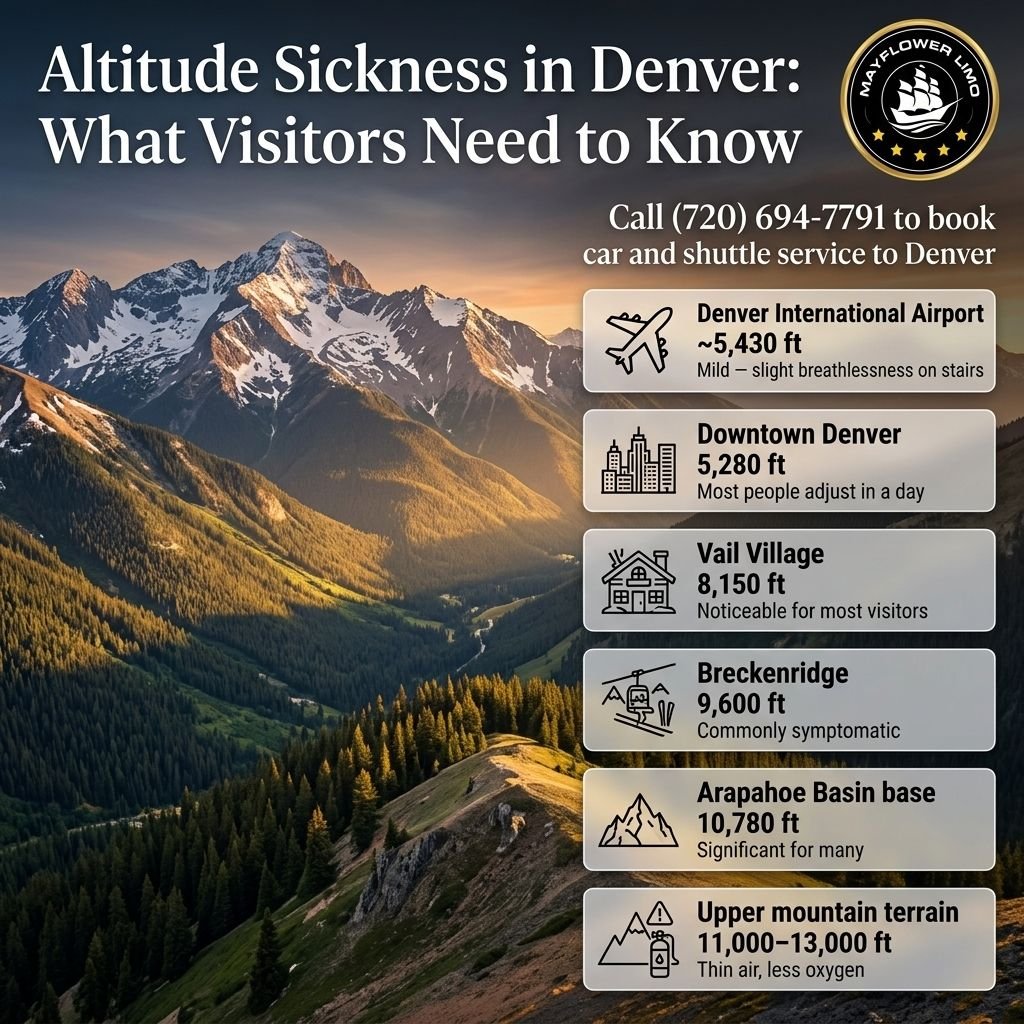
The Two-Stage Climb
Here’s the gain most visitors make without registering it.
| Where | Elevation | Typical effect |
|---|---|---|
| Denver International Airport | ~5,430 ft | Mild — slight breathlessness on stairs |
| Downtown Denver | 5,280 ft | Most people adjust in a day |
| Vail Village | 8,150 ft | Noticeable for most visitors |
| Breckenridge | 9,600 ft | Commonly symptomatic |
| Arapahoe Basin base | 10,780 ft | Significant for many |
| Upper mountain terrain | 11,000–13,000 ft | Thin air, less oxygen |
Flying in from sea level and skiing at 11,000 feet the same day is roughly a two-mile vertical gain inside twelve hours. The body manages it, mostly — but not always comfortably.
What It Actually Feels Like
Mild altitude sickness is common and usually passes. Headache is the most frequent complaint, often appearing a few hours after arrival. Breathlessness on mild exertion — stairs, walking uphill, carrying a bag — surprises people who are otherwise fit. Fatigue beyond what the travel day explains. Poor sleep on the first night, and sometimes nausea or loss of appetite.
Most of this eases within a day or two as the body adjusts.
Symptoms that get worse rather than better, severe headache that doesn’t respond to painkillers, confusion, persistent vomiting, or breathlessness at rest are a different matter — those warrant descending to lower elevation and seeing a doctor. Resort towns all have medical clinics accustomed to this.
Anyone with a heart or lung condition, or who is pregnant, should talk to their own doctor before a high-altitude trip rather than planning around general advice.

What Actually Helps
Water, more than feels necessary. Colorado’s air is extremely dry and you lose fluid through breathing alone. A large share of what visitors call altitude sickness is dehydration wearing its clothes.
Go easy on alcohol the first night. It hits harder at elevation and dehydrates you further — the two things you’re trying to avoid.
Spend a night in Denver if your schedule allows. One night at 5,280 feet before going higher is the single most effective thing you can do, and it costs you an evening.
Take the first ski day gently. Half a day rather than a full one. The mountain will still be there tomorrow, and pushing through on day one is how people end up losing day two.
Eat properly. Appetite often drops at altitude, which compounds the fatigue.
Our Colorado packing guide covers what to bring for this specifically — water bottle, electrolytes and your usual painkiller.
Why the Drive Matters
This is the part that gets overlooked in advice written for hikers rather than ski travellers.
The drive from DIA to the mountains crosses the Eisenhower Tunnel at 11,158 feet or Berthoud Pass at 11,307. You gain most of your elevation in a two-hour car journey, immediately after a flight, often having eaten badly and drunk little.
If you’re driving yourself, that’s a demanding mountain road taken while your body is adjusting — and the fatigue and mild headache that altitude produces are not what you want behind the wheel on Vail Pass. It’s a genuine argument for a transfer that has nothing to do with comfort. Our airport transfer guide covers the routes.

Timing Your Arrival
If you can, land in the morning rather than the evening. It gives you daylight hours to hydrate, eat and move gently before the first night’s sleep, which is when symptoms typically peak.
If you’re arriving late and heading straight up, drink water on the drive and plan a slow first morning rather than a 7am lift queue.
And if you have a choice of resort, elevation varies more than people realise — Winter Park’s base is lower than Breckenridge’s, which is lower than Arapahoe Basin’s. For a family where someone is prone to it, that difference is worth factoring in.
Current conditions for the drive are on COtrip.org. See our rates or call (720) 694-7791.
This article is general information, not medical advice. If you have a health condition affected by altitude, speak to your doctor before travelling.
Frequently Asked Questions
Will I get altitude sickness in Denver?
At 5,280 feet most visitors notice mild breathlessness and tiredness rather than genuine sickness. The mountains, at 8,000 to 11,000 feet, are where symptoms usually appear.
How long does it take to adjust?
Mild symptoms typically ease within one to two days as the body adapts.
Should I spend a night in Denver first?
If your schedule allows, yes. One night at Denver’s elevation before going higher meaningfully reduces symptoms for most people.
What are the warning signs to take seriously?
Symptoms worsening rather than easing, severe headache unresponsive to painkillers, confusion, persistent vomiting or breathlessness at rest. Descend and seek medical attention.
Does drinking water really help?
Substantially. Colorado’s dry air accelerates fluid loss, and dehydration accounts for much of what people experience as altitude sickness.
Which resorts sit at lower elevation?
Winter Park and Vail Village are lower than Breckenridge or Arapahoe Basin. If someone in your group is prone to altitude symptoms, it’s worth considering.