
Choosing between Colorado ski resorts for beginners has less to do with how many green runs a mountain has than with how easy it is to get to them, get back to them, and find everyone afterwards. Every major resort in the state has beginner terrain. Not all of them make it simple to spend a day there without crossing the mountain twice.
And none of them mention the altitude on the brochure. Call (720) 694-7791 for the ride up.

What Makes a Resort Good for Learning
Beginner terrain at the base. If the green runs are at the bottom, a nervous first-timer can take a lift, ski down, and repeat without committing to a descent they can’t abandon. Resorts where the learning area is high on the mountain force a decision.
A separate learning area. A flat zone with a magic carpet, away from confident skiers coming through at speed, makes the first two hours dramatically less frightening.
Easy regrouping. Mixed-ability groups split up all day. A base area everyone can find and return to matters more than a trail count.
Lower elevation. Learning is physically hard work, and doing it at 10,000 feet on your first day in Colorado is harder than it needs to be.
Short drive from Denver. Two hours in the car before a first lesson is a lot, and the drive home after is worse.
Comparing Colorado Ski Resorts for Beginners
| Resort | Base elevation | Drive from DIA | Best for |
|---|---|---|---|
| Keystone | ~9,280 ft | 1 hr 45 min | Families — strong beginner reputation |
| Winter Park | ~9,000 ft | 1 hr 45 min | Closest, good learning terrain |
| Breckenridge | ~9,600 ft | 2 hrs | Town plus mountain for mixed groups |
| Copper Mountain | ~9,712 ft | 1 hr 50 min | Naturally separated ability levels |
| Beaver Creek | ~8,100 ft | 2 hrs 30 min | Lower elevation, family-focused service |
| Vail | ~8,150 ft | 2 hrs 15 min | Lower base, large ski school |
Copper deserves a specific mention for an unusual reason: its terrain is naturally divided by difficulty across the mountain, so beginners and experts largely stay in separate areas without anyone planning it. For a mixed group that reduces the main source of friction on a ski trip.
Beaver Creek and Vail sit noticeably lower than the Summit County resorts, which on a first trip matters more than the trail map does.
Book the Lesson. Properly.
The single most common mistake on a first ski trip is a friend or relative teaching you. It’s well-meant and it usually produces a bad day, a bad habit and occasionally an injury.
Group lessons are cheap and effective for most people. Private lessons cost more and progress you faster, which is worth it if you only have two or three days. Either way, book in advance — ski schools fill over holidays and weekends, and turning up hoping on 27 December doesn’t work.
Most resorts bundle lesson, rental and lift access, which is usually cheaper than buying the three separately and removes a morning of queuing.
Come in Spring, Not Midwinter
This is the advice that changes a first trip most.
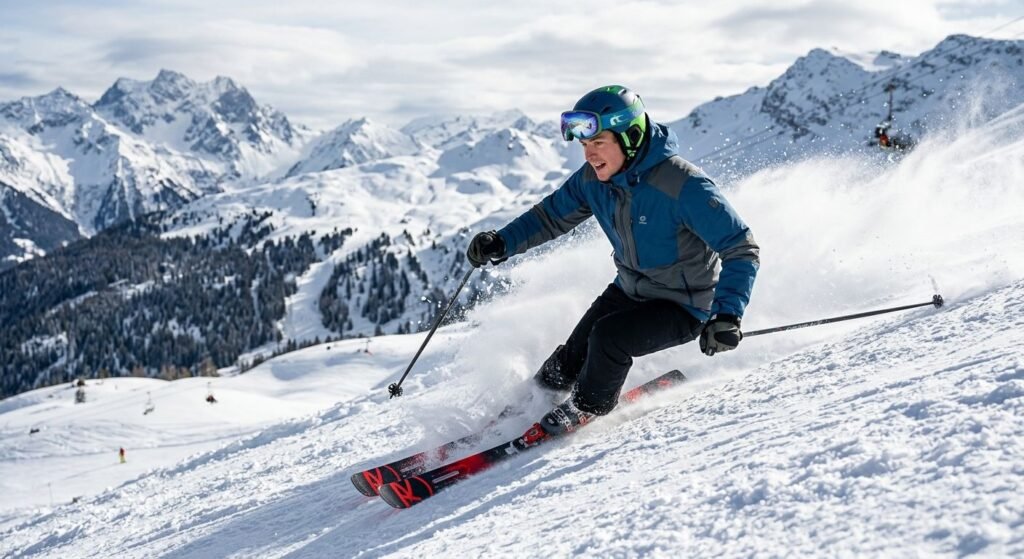
Late March and early April give you warmer days, softer snow and gentler falls. January gives you cold, firm, fast snow — superb if you can ski, miserable if you’re spending half the day sitting on it.
Beginners also tire quickly, and a sunny spring afternoon on a deck is a much better end to a learning day than a dark, cold one. Our guide to the best time to ski Colorado covers the full calendar.
The Altitude Nobody Warns You About
Learning to ski is genuinely physical — falling, getting up, carrying skis, standing in boots. Doing that at 9,600 feet on your first day off a plane is a different proposition from doing it at sea level.
Expect to be breathless faster and tired sooner than you’d expect. Drink more water than feels necessary, plan a half day rather than a full one to start, and don’t treat the fatigue as a sign you’re bad at it.
Our altitude guide covers what to expect and how to reduce it.
Rent Everything
Nobody should buy equipment before learning whether they enjoy skiing. Resort rental shops carry current gear, fit boots properly, and will swap anything that’s uncomfortable — which matters on day one more than on day fifty.
Book rentals online in advance for peak weeks, and use the resort’s delivery service to your lodging if offered. It removes a 7am queue on your first morning.
What you do need to bring is warm layers, goggles, gloves and sunscreen — the things rental shops don’t cover. Our packing guide has the list.
Getting There Without Starting Badly
A first ski trip has enough new things in it without adding an unfamiliar mountain highway in winter. Colorado’s traction law applies on I-70 in declared conditions, requiring adequate tyres or all-wheel drive — check COtrip.org before travelling.
For a family with children, gear and no snow-driving experience, a transfer removes the part of the day most likely to go wrong. See our rates or call (720) 694-7791.

Frequently Asked Questions
Which Colorado resort is best for beginners?
Keystone and Winter Park are both strong for families and first-timers, and both are under two hours from the airport. Beaver Creek and Vail sit at lower elevation, which helps on day one.
Should I take a lesson?
Yes. Being taught by a friend is the most common way a first ski trip goes badly. Book in advance, especially over holidays.
When is the best time for a first ski trip?
Late March or early April. Warmer days, softer snow and gentler falls than midwinter.
Do I need to buy equipment?
No. Rent everything until you know you enjoy it. Bring warm layers, goggles, gloves and sunscreen.
Will the altitude affect me?
Likely. Learning is physical work and resort bases sit between 8,000 and 10,000 feet. Hydrate and plan a half day to start.
Which resort is closest to Denver airport?
Winter Park and Keystone are both around 1 hour 45 minutes in clear conditions. Call (720) 694-7791 for a flat-rate transfer.