
Quick answer: A Sprinter van becomes worth it at seven or more passengers, or at five to six passengers carrying bulky gear like skis or golf clubs. Below that, a single SUV is cheaper and a van is wasted capacity. Above fourteen, you’re into multiple vehicles again. The break-even is about capacity per dollar — not comfort.
Not sure which you need? Call (720) 694-7791 and describe your group.
The mistake almost every group makes
People book by seat count. A 14-passenger van seats 14. It does not carry 14 people and 14 suitcases.
Once every row is occupied, cargo space collapses to whatever sits behind the last row. That’s fine for a night out. It fails badly for an airport run.
| Vehicle | Seats | Realistic with full luggage | With ski or golf bags |
|---|---|---|---|
| Full-size SUV | 6 | 4 | 3–4 |
| Sprinter van | 14 | 11–12 | 10–12 |
| High-roof extended van | 14 | 12–13 | 11–13 |
| Executive Sprinter | 13 | 10–11 | 9–11 |
Working rule: subtract two to three from the seat count for a luggage trip. Book by the right-hand columns, not the left.
The break-even, group size by group size
| Group | Best option | Why |
|---|---|---|
| 1–4 | One SUV | A van is paying for empty seats |
| 5–6, light bags | One SUV | Fits, and cheaper |
| 5–6, ski or golf gear | Van | Gear won’t fit in one SUV |
| 7–10 | Van | Clear win over two SUVs |
| 11–13 | Van | Still one vehicle |
| 14+ with luggage | Van + SUV, or two vans | One van is over capacity once bags are counted |
Van versus two SUVs: the real comparison
For seven to twelve people this is the actual decision, and cost is only part of it.
| One Sprinter van | Two SUVs | |
|---|---|---|
| Cost | One flat rate | Two flat rates — usually more |
| Group stays together | Yes | No |
| Arrival | Everyone at once | Vehicles separate in traffic |
| Coordination | One driver, one contact | Two of everything |
| Luggage | One dedicated cargo area | Split across two boots |
| Standing headroom | Yes in high-roof models | No |
| Tight access roads | Harder | Easier |
| Flexibility on the day | One schedule for all | Groups can split |
Two SUVs usually cost more than one van and produce two arrival times. The group that leaves the hotel together no longer arrives together, and someone spends the journey texting the other car.
The exception is genuine flexibility — if half your group wants to leave a venue at 10pm and the rest at midnight, two vehicles solve a problem one van can’t.

When a van isn’t worth it
Four situations where a van is the wrong call even at the right headcount:
- Tight or gated access. Pedestrian resort villages, narrow mountain lanes, steep private drives and some parking structures are difficult or impossible for a large van. Check before booking.
- You need to split up. Different schedules on the same day means two vehicles, whatever the maths says.
- Short hops with quick turnaround. A van is slower to load and unload — noticeable if you’re making several stops in an evening.
- Independence Pass and similar restricted roads. Some Colorado mountain roads carry vehicle length limits, which forces a longer route. Ask about routing if your destination is Aspen.
What you actually get in a van that you don’t in an SUV
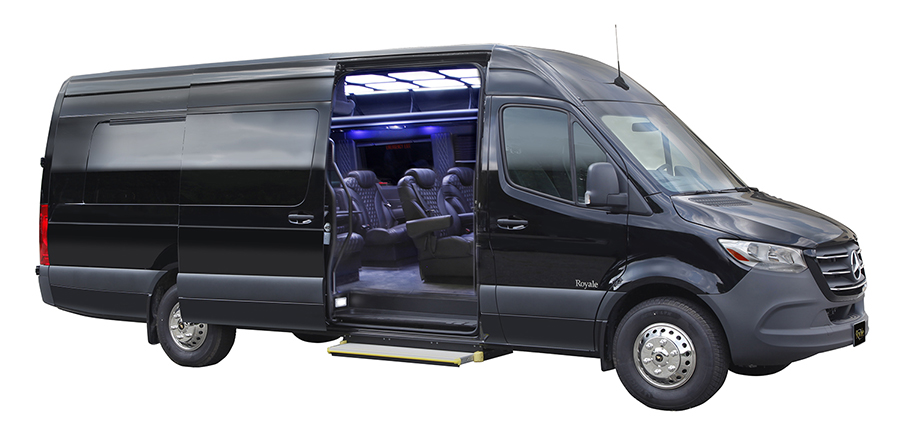
- Standing headroom in high-roof models — a real difference on a two-hour mountain transfer.
- Individual seats with space between them, rather than three across a bench.
- A dedicated cargo area separate from the passenger space.
- Conversation — everyone in one space rather than split across two cars.
- One point of contact with one driver, which matters more than it sounds on a group trip.
The trips where a van clearly pays off
| Trip type | Why a van wins |
|---|---|
| Group ski trip | Ski bags need dedicated cargo space |
| Airport transfer, 7+ people | One vehicle, one arrival, one rate |
| Wedding party | Group arrives together, dresses and suits have room |
| Corporate team travel | Conversation en route, single invoice |
| Concert or stadium night | No second vehicle to coordinate afterwards |
| Multi-generational family trip | Easier entry, everyone together |
| Golf group | Clubs need the same space skis do |
Four questions before you book
- What’s the real headcount, including children? Car seats take a full seat and need requesting in advance.
- What’s the full luggage inventory? Count oversized items separately — skis, boards, clubs, instruments, pushchairs.
- Can a large vehicle reach every pickup and drop-off? Ask about gated villages, narrow streets and low-clearance structures.
- Will the group move as one all day? If not, price two vehicles rather than discovering the problem at 11pm.
Our guide on how much luggage actually fits in a Suburban or Sprinter goes into capacity in more detail. For a sizing recommendation based on your group, call (720) 694-7791 or book online.
Frequently asked questions
How many people fit in a Sprinter van with luggage?
Around 11 to 12 with full-size suitcases, and 10 to 12 with ski or golf bags — against a nominal 14 seats. Subtract two or three from the seat count for any luggage trip.
Is a Sprinter van cheaper than two SUVs?
Usually yes for seven or more passengers. One flat rate typically comes in below two, and you avoid the coordination of two vehicles.
At what group size should I book a van instead of an SUV?
Seven passengers, or five to six if you’re carrying skis, snowboards or golf clubs.
Can a Sprinter van reach ski resort villages?
Most base areas, yes — but pedestrian cores, gated communities and steep private drives can be restricted. Confirm your exact address at booking.
Is a van uncomfortable compared to an SUV?
Generally the opposite on longer trips. High-roof models offer standing headroom and individual seats rather than a three-across bench.
What if my group wants to leave at different times?
Book two vehicles. One van means one schedule, which is its main limitation. Call (720) 694-7791 to price both options.